Programme
|
Key: |
Room A25 |
Room A24 |
|
Tuesday 25th August |
||
|
18:00-21:00 |
Conference registration and Welcome Reception at GSK Carbon Neutral Laboratory for Sustainable Chemistry |
|
|
Wednesday 26th August |
||
|
08:30-09:00 |
Conference registration (Business School South Building foyer) |
|
|
09:00-09:15 |
Conference opening - Room A25, Business School South Building |
|
|
09:15-10:15 |
Plenary talk: Hana Rudová |
|
|
10:15-10:45 |
Coffee break |
|
|
10:45-12:00 |
University Timetabling I |
Healthcare Scheduling I |
|
12:00-13:15 |
Lunch (Computer Science Building, A07) |
|
|
13:15-14:30 |
University Timetabling II |
Healthcare Scheduling II |
|
14:30-14:50 |
Coffee break |
|
|
14:50-16:05 |
University Timetabling III |
Transport Optimisation I |
|
16:05-16:25 |
Coffee break |
|
|
16:25-18:05 |
Sports Scheduling |
Transport Optimisation II |
|
19:00-20:30 |
Pub social activity (Fothergills Restaurant – 5-7 Castle Rd, Nottingham NG1 6AA; coach from Business
School South at 18:45) |
|
|
Thursday 27th August |
||
|
09:00-09:15 |
Announcements - Room A25 |
|
|
09:15-10:15 |
Plenary talk: Kevin Tierney Automated Heuristic Discovery:
from Deep Reinforcement Learning to Large Language Models |
|
|
10:15-10:45 |
Coffee break |
|
|
10:45-12:00 |
Personnel
Scheduling |
Routing & Logistics |
|
12:00-13:15 |
Lunch (Computer Science Building, A07) |
|
|
13:15-14:15 |
Plenary talk: David Pisinger Stochastic ALNS for Two-Stage
Stochastic Routing and Scheduling Problems |
|
|
14:15-14:35 |
Coffee break |
|
|
14:35-15:50 |
General Scheduling I |
Schools & Educational Planning I |
|
15:50-16:10 |
Coffee break |
|
|
16:10-17:25 |
General Scheduling II |
Schools & Educational Planning II |
|
18:30-22:30 |
Conference banquet (Wollaton Hall – Nottingham NG8 2AE; coach from Business
School South at 18:00, coach back at 22:00) |
|
|
Friday 28th August |
||
|
09:00-09:15 |
Announcements - Room A25 |
|
|
09:15-10:15 |
Plenary talk: Jeroen Mulder Toward Resilient Airline
Planning: From Fleet Planning to Operations Control |
|
|
10:15-10:45 |
Coffee break |
|
|
10:45-12:00 |
Nurse Rostering I |
Production & Manufacturing Scheduling I |
|
12:00-13:15 |
Lunch (Computer Science Building, A07) |
|
|
13:15-14:05 |
Nurse Rostering II |
Production & Manufacturing Scheduling II |
|
14:05-14:20 |
Conference closing - Room A25 |
|
|
14:20-15:00 |
Coffee break |
|
|
15:30-17:30 |
Guided walking tour of Nottingham (starting outside the
Nottingham
Contemporary Museum; coach from Business School South at 15:00) |
|
|
Saturday 29th August |
||
|
09:30-16:30 |
Social trip to Stratford-upon-Avon (coach at 9:30
from the Business School South Building) |
|
Invited Speakers
Jeroen Mulder, Air France-KLM, France
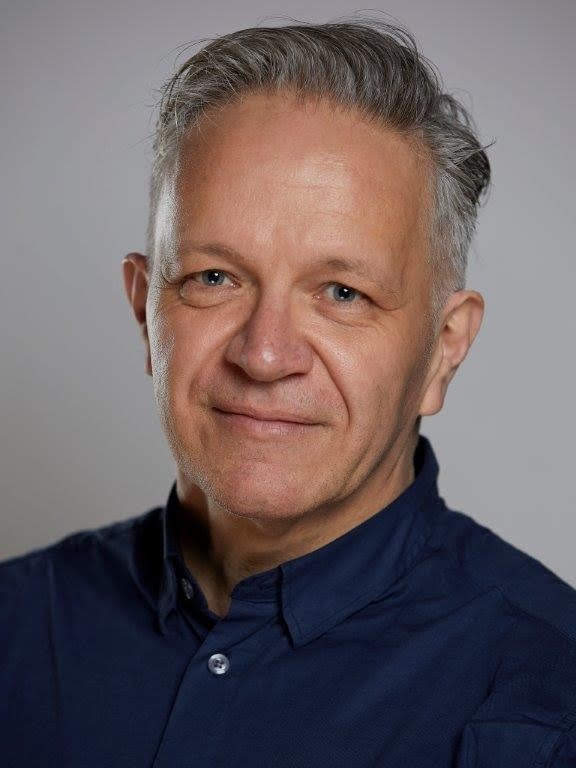
Jeroen Mulder is Innovation Lead at KLM Royal Dutch Airlines, working within the Technical Innovation department.
He holds a PhD in algebraic geometry and has more than 25 years of experience as an operations research analyst and data scientist. Throughout his career at Air France–KLM, he has developed simulation, optimization, and statistical models for multiple business domains, including the Operations Control Centre, Hub Control Centre, Engineering & Maintenance, and Revenue Management.
Jeroen spent five years in Paris as part of the French Operations Research team, where he contributed to the development of forecasting and optimization models for the joint Air France–KLM Revenue Management system.
In his current role, he focuses on accelerating innovation across Air France–KLM by exploring emerging technologies and carefully balancing their potential benefits and risks. His work includes initiatives in Generative AI and quantum technologies, often in collaboration with academic and industry partners.
Alongside his professional activities, Jeroen conducts personal research at the intersection of physics and mathematics. His work explores the deep connections between thermodynamics and mathematical optimization, as well as between quantum physics and statistics, aiming to better understand how physical principles can inform decision-making and algorithm design.
Title: Toward Resilient Airline Planning: From Fleet Planning to Operations Control
Abstract: Airlines make thousands of interconnected decisions across different planning horizons, ranging from long-term fleet and network planning to real-time operational control. While each planning process has traditionally been optimized in isolation, increasing operational complexity and uncertainty call for a more integrated perspective on resilience. Drawing on insights from an ongoing research collaboration, initiated through the Kickstart.AI program, between Air France-KLM, Utrecht University, and the University of Twente, this presentation places a series of research projects within the broader context of the airline planning process. Through practical case studies, it highlights three recurring themes: accounting for interdependencies across planning processes, explicitly incorporating uncertainty into planning models, and developing customized optimization methods tailored to the unique characteristics of airline planning.
David Pisinger, Technical University of Denmark, Lyngby, Denmark

David Pisinger is professor in operations research at DTU Management. David graduated in mathematics and computer science in 1990, and finished his PhD at University of Copenhagen in 1995. His main research topics include; metaheuristics, transportation problems, machine learning in optimization, and offshore wind farm design. He has written more than 100 papers in leading journals, and a monograph on Knapsack Problems. David Pisinger received the PhD prize of the Danish Academy of Natural Sciences in 1995 for his thesis on Knapsack Problems. Moreover he received the Hedorfs Fonds prize for Transport Research 2013; award of teaching excellence Faculty of Natural Sciences, University of Copenhagen 2000; and the Teaching Prize at DTU Management in 2016, 2024. He received the Glover-Klingman prize in 2018, and in 2019 he was one of the finalists for the Franz Edelman Award. In 2022 he received an ERC advanced grant for the project "DECIDE". David has supervised more than 30 PhD students, many of which have received awards and distinctions. He is Area editor of Transportation Science, and Associate editor of TR-C and FLEX. Having a background in Knapsack Problems, David can be recognized on always wearing a knapsack.
Title: Stochastic ALNS for Two-Stage Stochastic Routing and Scheduling Problems
Abstract: We present a general local search framework for scenario-based two-stage combinatorial stochastic programming problems. The framework is based on Adaptive Large Neighborhood Search (ALNS), where an upper-level local search method operates on the first-stage decision variables, while a number of lower-level local search methods optimize the individual scenarios. As a demonstration of the Stochastic ALNS algorithm, the framework is tested on the two-stage stochastic Prize-collecting Vehicle Routing Problem, and stochastic Team Orienteering Problem. In all problems, the customers, demands and travel times can be stochastic as long as they can be represented by a number of scenarios. Computational experiments show that the algorithm scales well with the number of scenarios, making it possible to solve instances with up to 1000 customers in short time.
Hana Rudová, Masaryk University, Brno, Czech Republic
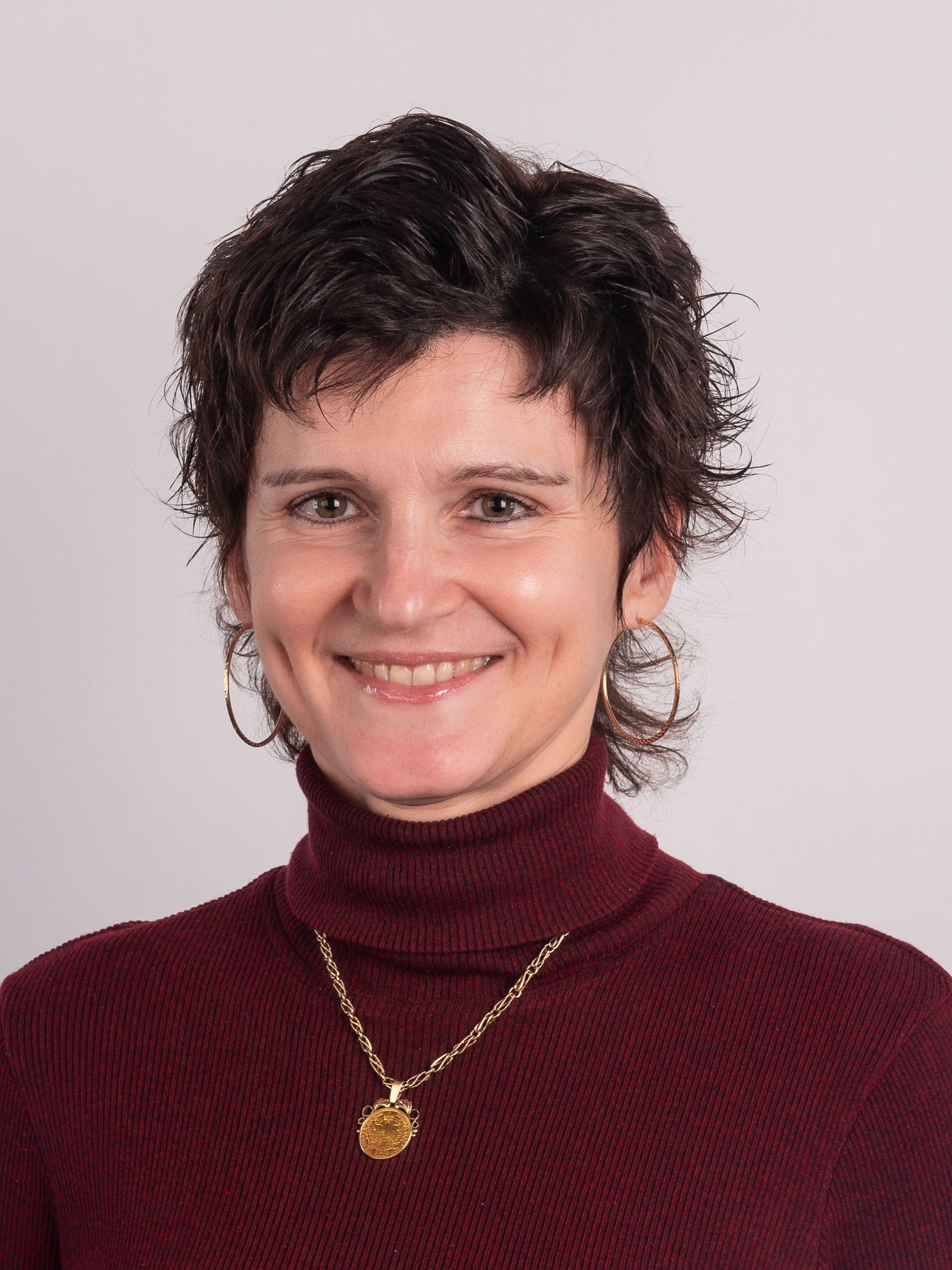
Hana Rudová is an associate professor at Masaryk University in Brno, Czech Republic, where she works on scheduling and routing problems and serves as the head of the Department of Machine Learning and Data Processing. Her work is inspired by real-life problems arising from practice, and she concentrates on approaches that enable the solution of practical problems, such as course timetabling in the UniTime system, vehicle routing with Wereldo company, warehouse planning with Notino company, or computer job scheduling in the CERIT national infrastructure. She is the associate editor of the Journal of Scheduling, a member of the SoCS Council, and a member of the PATAT Steering Committee. She co-chaired the Symposium on Combinatorial Search 2025 and the PATAT 2006 conference in her hometown, as well as several Application tracks at the ICAPS conference. She co-organized the International Timetabling Competition (ITC 2019) with almost 700 registered users from 80 countries, preparing benchmarks from ten universities on five continents.
Title: Elegance of Simplicity: Designing Metaheuristics for Real-World Applications
Abstract: Metaheuristics serve as the primary building blocks for modern industrial solvers and complex optimization engines. While their flexibility allows for rapid integration into both academic frameworks and practical software, the pursuit of performance often leads to their over-engineered designs. Beyond that, we emphasize the idea of simplicity and simplification in algorithm design as the keys to generality and robustness. Drawing on a wide range of successful applications, we show how distilling algorithms to their core principles leads to better outcomes. We present case studies across several optimization challenges: implementing slack induction by string removals in vehicle routing, utilizing iterative forward search in course timetabling, and applying local search in grid scheduling and warehouse planning. Furthermore, we discuss how cross-domain hyper-heuristics benefit from this philosophy. With a focus on robust performance across diverse and complex domains, designing simple(r) algorithms can advance the current state of the art.
Kevin Tierney, University of Vienna, Vienna, Austria

Kevin Tierney is currently Professor of Production and Logistics at the University of Vienna in Austria. He was previously Professor of Decision and Operation Technologies at Bielefeld University in Germany and Assistant Professor of Decision Support Systems and Operations Research at Paderborn University in Germany. His PhD is from the IT University of Copenhagen in Denmark where he wrote his thesis on optimizing liner shipping fleet repositioning. His work focuses on the intersection of machine learning and optimization, specifically how to make optimization solvers faster and data-driven through the integration of modern machine learning techniques. His work has won best paper awards at GECCO, ECAI and from the EURO for best review paper at EJOR. He has won multiple competitions with his work, including both tracks at the IJCAI AI4TSP competition and multiple awards at the MaxSAT Evaluation 2016. He is currently the coordinator of the MSCA Doctoral Network “Confident Data-Driven Decision Support (CoRDS).”
Title: Automated Heuristic Discovery: from Deep Reinforcement Learning to Large Language Models
Abstract: Designing high-performance heuristics is a complex task that requires both intuition and deep domain knowledge. Recent advances in deep reinforcement learning (DRL) and large language models (LLMs) have led to new ways of creating heuristics that rival the performance of state-of-the-art human-designed approaches. In this talk, I introduce these new mechanisms for heuristic design and describe their advantages and limitations, with a focus on routing and scheduling problems. The talk will include two methods: Neural Deconstruction Search, an approach harnessing DRL to learn policies for constructing routing and scheduling solutions, and VRPAgent, an evolutionary approach to generate novel routing heuristics.